I have lost 125 pounds. I have regained some, too.
Along the way, I have had to keep learning about food, my habits, and what happens when life gets overwhelming.
The scale can tell me a number. It cannot tell me whether I feel satisfied after a meal, whether I have been paying attention to thirst, or what was happening emotionally when I reached for something to eat.
Those things deserve my attention, too.
Nutrition is personal. We bring our schedules, our upbringing, our preferences, our stress, and our experiences to the table. I bring my own complicated relationship with food.
That is why I want this conversation to begin with curiosity.
What am I noticing?
What do I need?
What is one choice I can realistically repeat?
INFLAMMATION IS COMMUNICATION
“Inflammation is communication” is a phrase I use to invite awareness.
In biological terms, inflammation is part of the body’s immune response. Short-term inflammation helps us respond to injury and infection. When inflammation persists, it can contribute to tissue damage and disease.
But we cannot diagnose inflammation by how we feel after lunch.
Bloating, tiredness, aches, or changes in how our clothes fit can have many explanations. They deserve attention without immediately blaming one food—or ourselves.
For me, “communication” means giving myself permission to notice something and respond thoughtfully. Sometimes that response is a change in routine. Sometimes it is a conversation with a healthcare professional.
Awareness gives us a place to begin. It does not require us to have the answer already.
MY EXPERIENCE IS A STARTING POINT
Sugar and flour have been part of my own conversations about food and the structure that works for me.
That personal experience matters. It also belongs in context.
The choices that help me manage my relationship with food are not automatically the rules someone else needs. A personal boundary around a food and a medical reason to avoid it are different things.
I want to understand both what I am eating and the circumstances around it.
Did I give myself time to eat?
Was the meal satisfying?
Was I rushing between responsibilities?
Was food the only break I allowed myself all day?
Those questions help me see where I may need more support.
Sometimes the next useful step is making a meal easier to prepare. Sometimes it is sitting down long enough to enjoy it. Sometimes it is asking for help with a pattern that feels difficult to change alone.
WHAT NUTRITION CAN CONTRIBUTE
Research suggests that Mediterranean-style eating patterns can reduce some markers of inflammation. These patterns commonly include vegetables, fruit, beans, lentils, whole grains, nuts, olive oil, and fish.
The emphasis is on the overall pattern over time.
One ingredient cannot promise to fix inflammation. One meal does not provide enough information to judge your health or your effort.
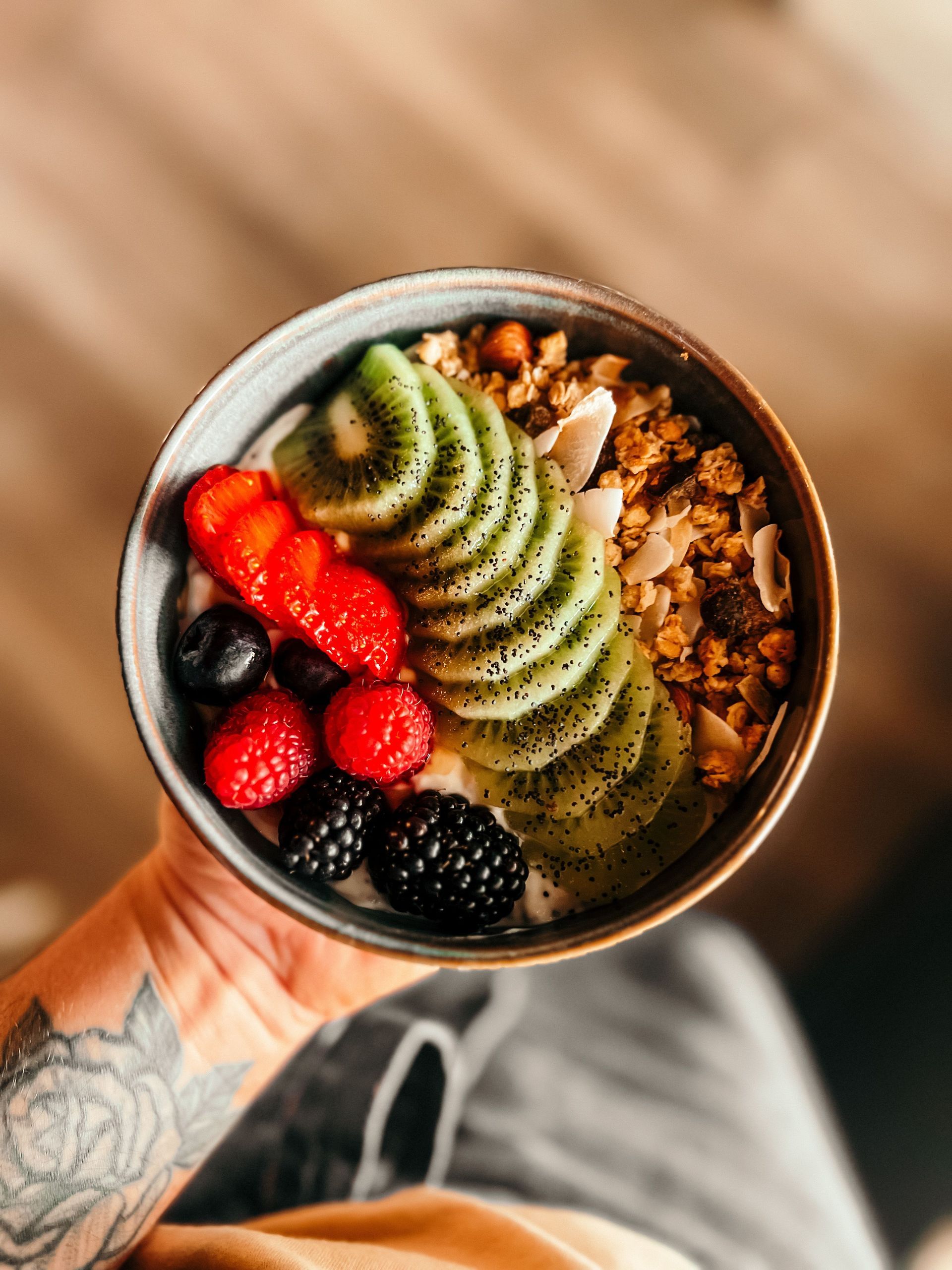
In everyday life, that might mean adding beans to a meal you already make, keeping frozen vegetables available, or choosing a breakfast that is both nourishing and satisfying.
There is room for convenience here. Frozen produce, canned beans, and simple meals can make consistency more practical.
Your food needs to work in the life you actually have.
MAKE THE SUPPORTIVE CHOICE EASIER
I know what it feels like to have a lot happening at once. When I am overwhelmed, even a small task can feel like one more thing.
That is where the environment matters.
If an option requires washing, chopping, cooking, and cleaning before I can eat, will I choose it on a busy evening? What could I prepare or keep available to make that moment easier?
We can ask the same question about water.
Returning to drinking water consistently has been one of my own areas of focus. Keeping it visible is a practical reminder to pay attention. Lemon is something I enjoy adding.
Hydration belongs in everyday care. It does not need to become another perfection project or a promise to “flush away” inflammation.
I want routines that support me when life is full.
SATISFACTION BELONGS IN THE CONVERSATION
What happens when we make a plan that looks wonderful on paper but leaves us feeling deprived, overwhelmed, or constantly preoccupied with food?
That is useful information.
A sustainable approach needs room for preferences, budget, time, culture, and enjoyment. It also needs enough flexibility to respond when life changes.
I am interested in the choice you can come back to.
The meal you know how to make.
The groceries you will actually use.
The pause that helps you recognize what you need.
The support that makes a difficult week more manageable.
That is where a small ripple can become a repeatable habit.
ONE RIPPLE TO TRY
Choose one addition that would make nourishment easier this week:
- Add a fruit or vegetable you enjoy to a familiar meal.
- Keep an easy meal option available for your busiest day.
- Place your water where you will remember it.
- Give yourself a few minutes to sit down and notice whether a meal satisfies you.
Choose one. Let it be manageable.
You can make a brief note about what helped and what got in the way. There is no need to track every bite or turn each sensation into a verdict about a food.
If symptoms persist, worsen, or concern you, bring them to a healthcare professional. A registered dietitian can also help you adapt nutrition choices to your individual needs.
A RIPPLE TO REFLECT ON
- What do I notice about how I eat when life feels overwhelming?
- Which meals leave me feeling satisfied and cared for?
- What could I make easier in my environment?
- Where would support help me more than another rule?