

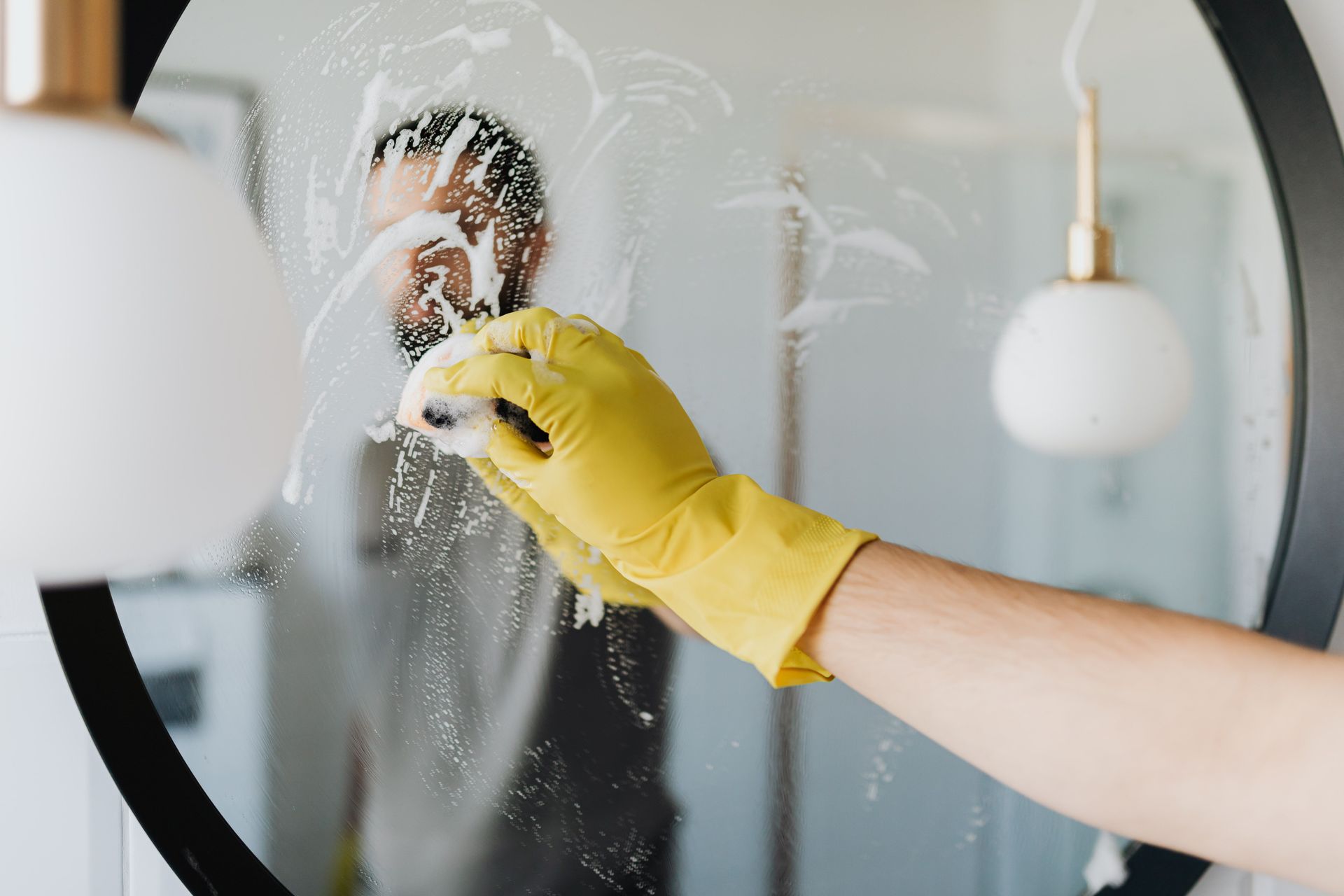
I don’t always meditate. Sometimes, I mop.
Sometimes I start a load of towels, pick things up, and work my way toward a counter I can actually wipe. Sometimes there is music involved. Sometimes there is dog hair. With two dogs, there is usually dog hair.
Cleaning in the evening can be a way for me to wind down. It gives my hands something to do and my attention somewhere to land. Folding a towel has a beginning and an end. A cleared surface is a change I can see.
And lately, while working through my own house, I’ve been noticing how much the little things matter: where something belongs, how many decisions a task requires, and whether the system I’m trying to create makes sense for the way we live.
I am very much practicing this as I go.
Start with the towels
Laundry has become a timer for me. I can start a load and use that cycle as a window to work on something else.
That gives a big, vague task like “get the house together” a little structure. There is something underway. There is a next step to come back to.
One sequence I’ve been working with is simple: pick up, then counter, then floor.
It helps to give the work an order. When I’m picking up, I can focus on picking up. I don’t have to solve the kitchen layout, reorganize every cabinet, and choose new fixtures before I’m allowed to appreciate a clear counter.
Those ideas can go on a list. The towel can go in the wash.
That is part of my practice, too: noticing an idea without letting every idea become the next project.
“I need assigned locations!”
During this house reset, I said exactly that.
I was thinking about linens, baskets, cleaning supplies, and all the things that get used regularly but don’t yet have a place that works well.
Putting something away gets more complicated when “away” hasn’t been decided.
That realization gave me a more useful question to ask: what would make this easier to use, put away, and find again?
I set up a box of rags with cleaner in the bathroom. I’ve been planning around having two sets of linens so there is a set to use while another is being washed. I’m still working out where things should live and which baskets or hooks would help.
The work is ongoing. But even making one decision about where something belongs can make the next round of tidying simpler.
And yes, my process has included something I call the “fuck-it bucket.” We are being honest here.
The name makes me laugh. It also belongs in a conversation about creating systems for a real household. Sometimes a temporary gathering place helps you keep moving while you work out the permanent one. The next part is coming back to it, because a bucket still needs attention eventually.
The movement inside the ordinary
There is movement woven through taking care of a home: walking between rooms, reaching for a towel, folding, wiping, carrying, pushing, and pulling.
There is also an opportunity to notice how I’m doing those things.
Am I rushing? Have I been holding my shoulders up? Would a different position feel more comfortable? Could I divide this task into smaller parts or take a break?
That is where mindfulness enters the picture for me. I can bring some attention to the thing I’m already doing. The feel of a towel in my hands. The rhythm of wiping a surface. My feet on the floor. A song that makes me move a little while I work.
Wiping a counter isn’t mystical. It can still be grounding.
And a task can be adapted. Folding while seated, carrying a smaller load, asking for help, or leaving something for another day can all be part of caring for yourself while caring for your space.
Let the progress register
At one point during my reset, I said, “The house is very picked up! I am happy.”
There were still things I wanted to change. I had ideas about storage, lighting, and how different rooms could function. I was still figuring out the linens.
But I could see what I had accomplished, and it felt good.
I want to give that moment some room. It is easy to finish something and immediately look at what remains. The next pile. The next room. The next thing that could work better.
Pausing to notice progress is part of the practice. I picked things up. I made a space easier to use. I followed through on one manageable task.
That counts while the rest is still unfinished.
A routine that supports you
Cleaning will not feel calming every day. Sometimes it is simply another responsibility, and sometimes rest or help is what you need. Your home does not have to be tidy for you to deserve either.
For me, the useful question is whether a routine supports the life I’m trying to live.
Can I find what I need? Can I make the next task easier? Can I do a little without turning it into a demand to finish everything?
This is where 4% Better fits. Choose one small thing that would make your space easier to live in: start the towels, clear a surface, or decide where one frequently used item belongs. Give yourself a manageable stopping point. Then notice what changed.
You may have more energy to continue. You may be ready to stop. Both are things worth paying attention to.
I’m building these routines because I want them to be repeatable. I want to come home to a space that works for us, and I want the process of caring for it to leave room for being human.
Sometimes that begins with a load of laundry.
Sometimes, I mop.
A Ripple to Reflect On
- Which ordinary task helps me feel a little more settled, if any?
- What repeatedly ends up out of place because I haven’t given it a workable home?
- What would make one daily task easier for me or my household?
- What progress can I acknowledge before moving on to the next thing?